2026 · Author
Meridian
A multi-tenant project tracker in the style of Jira — twelve Rust microservices, a React app and an event-driven core.
Problem
why this existsMost clones stop at the UI. Meridian's goal is the whole system behind one — boards, sprints, workflows, search, live updates and dashboards — built with production constraints from the first commit.
Architecture
napkin sketch, cleaned up- React appboards & sprints
- Rust servicesAxum + Tonic
- PostgresRLS + outbox
- Kafkaevent bus
- Search & analyticsOpenSearch, ClickHouse
Every write lands in a transactional outbox, flows through Kafka, and feeds search, notifications, live updates and analytics. The tenant comes only from a signed token, and PostgreSQL row-level security enforces it underneath the application code.
Technical decisions
and the trade-offsRow-level security for tenancy
Tenant isolation is enforced by PostgreSQL underneath the app code, not only by application checks.
Transactional outbox
Writes and their events commit together, so search, notifications and analytics never drift from the source of truth.
Closed-set workflow rules
Conditions, validators and post-functions come from closed sets, so no user code ever runs.
Screenshots
taped in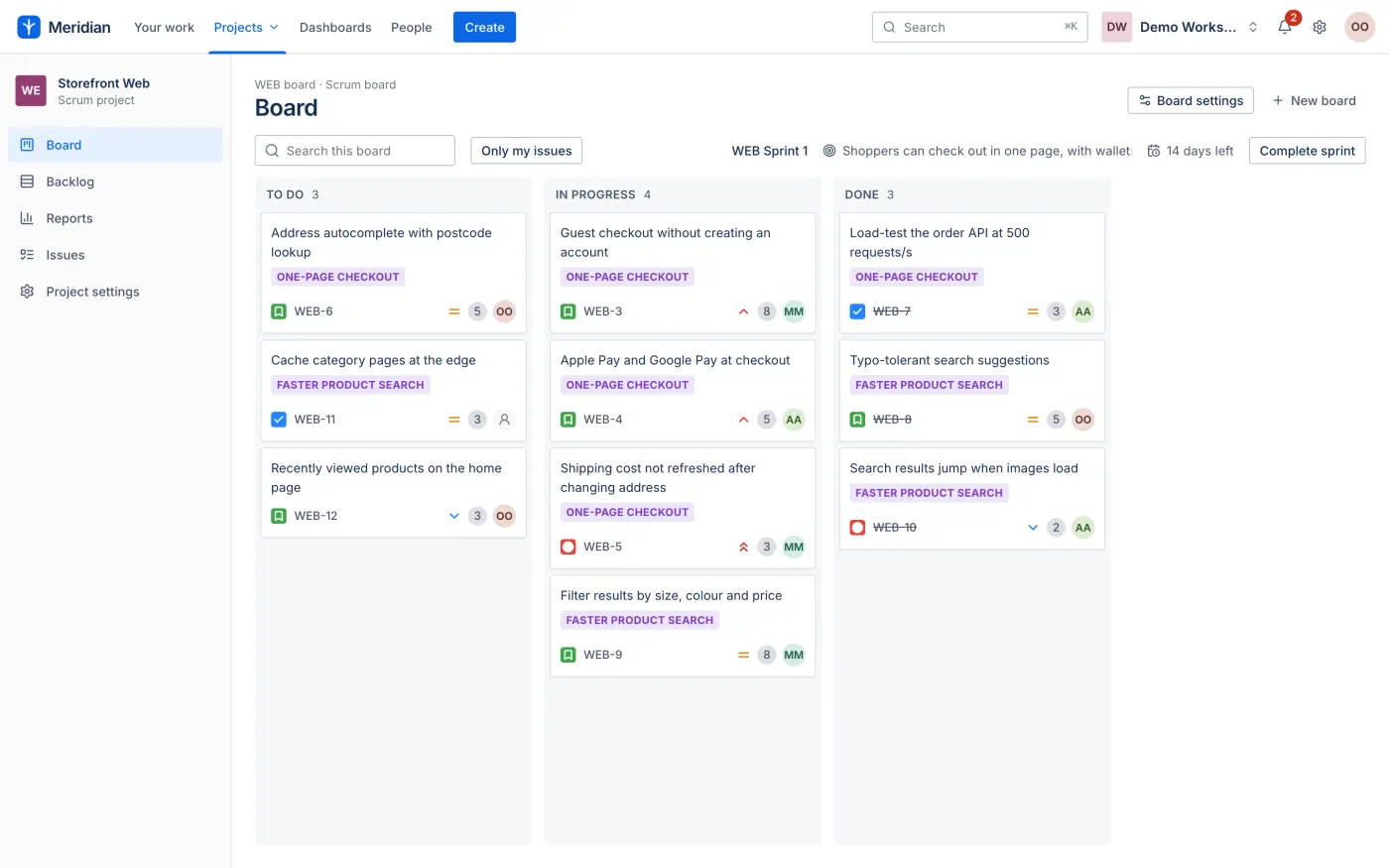 Scrum board, mid-sprint
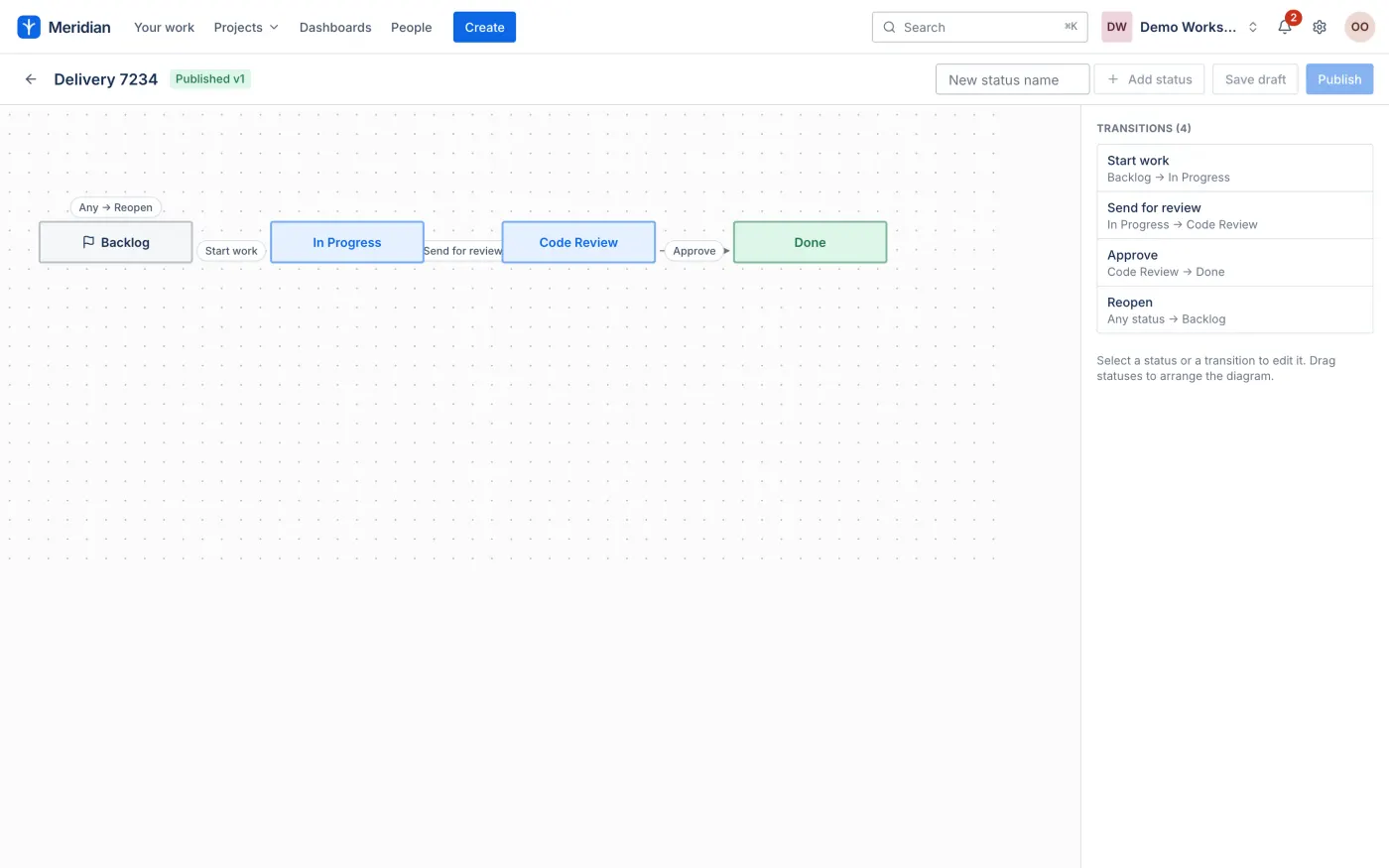 Visual workflow designer
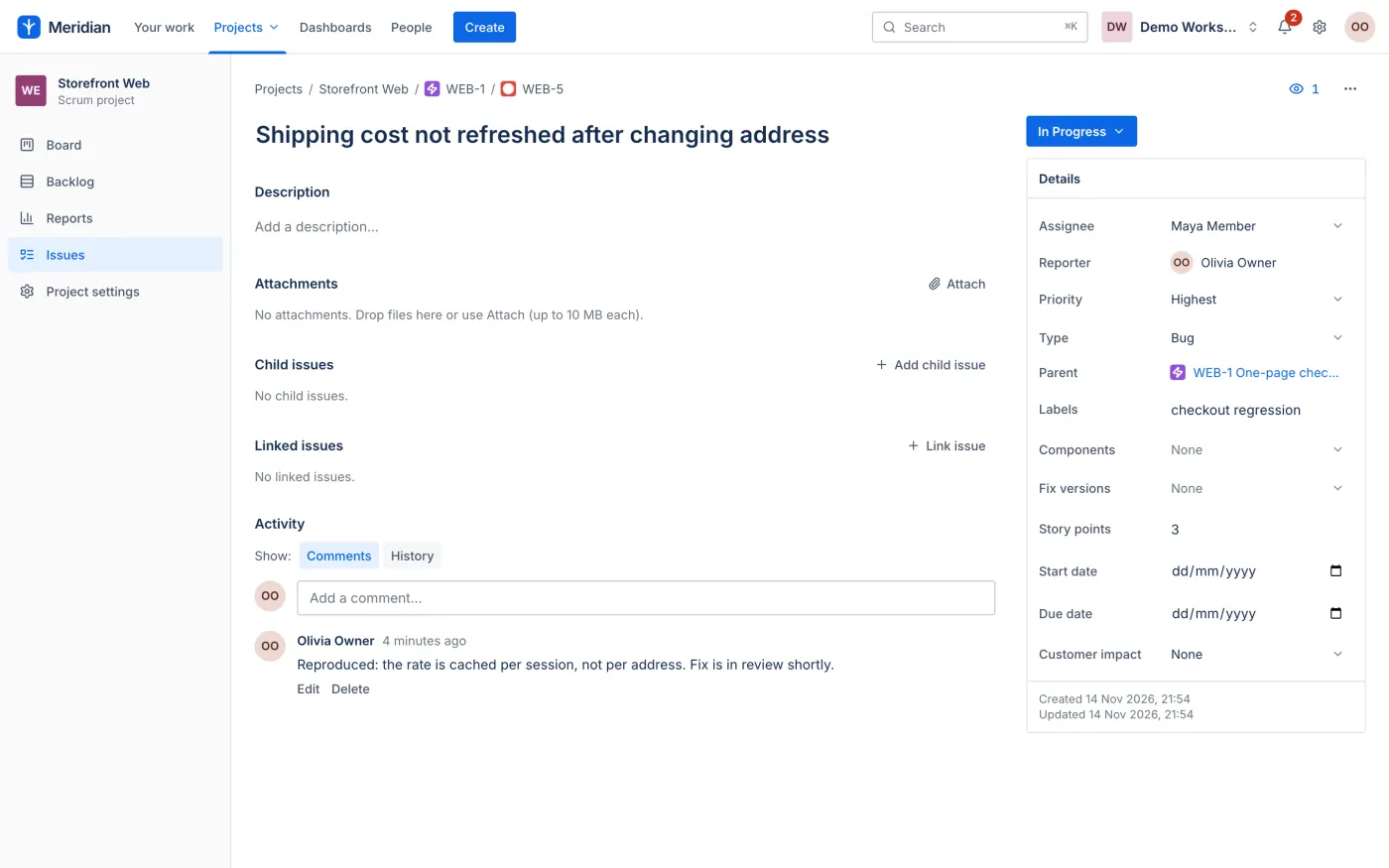 An issue, with history
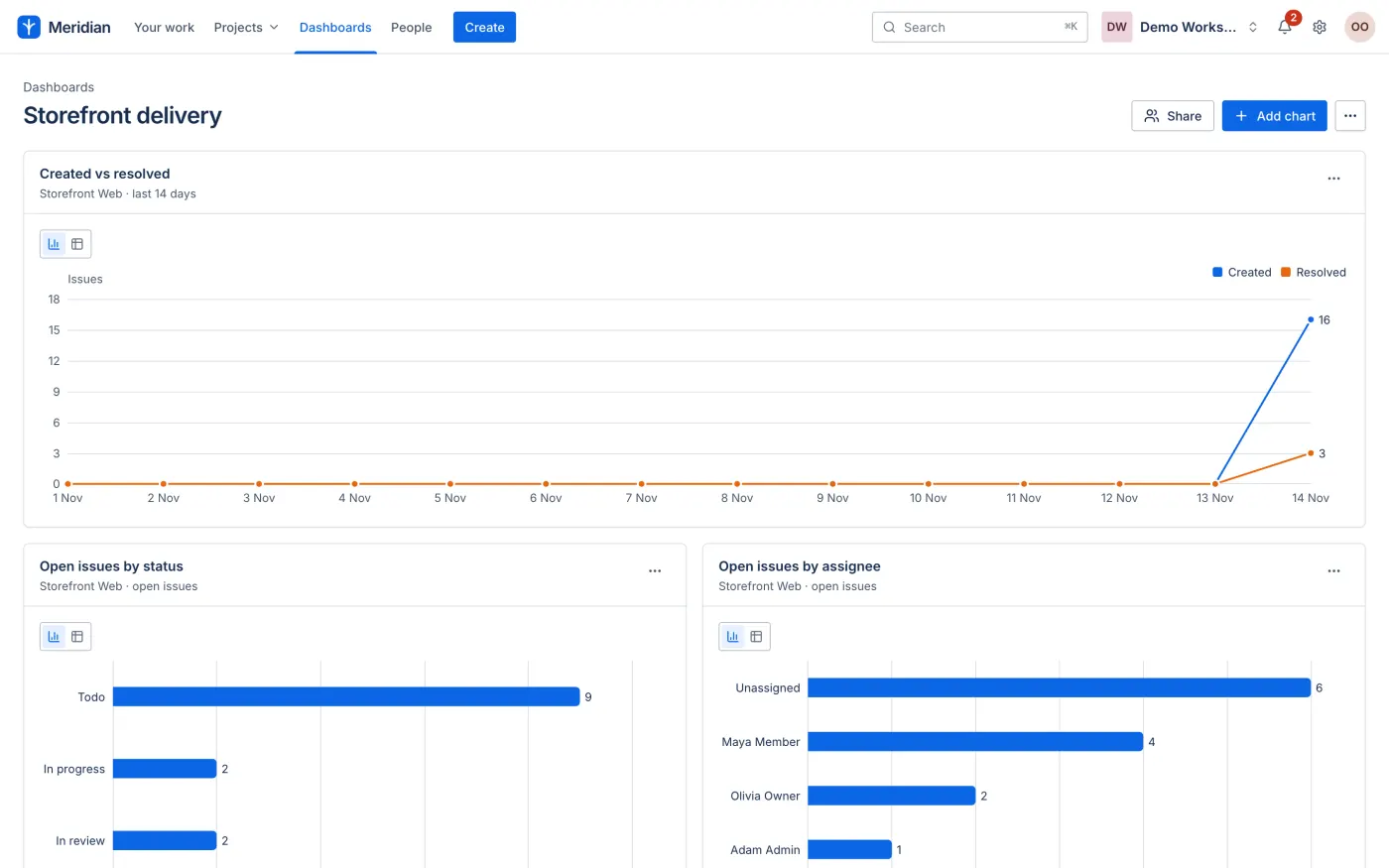 Dashboards
Key engineering challenges
the bruises- 1
Gap-free issue keys
Issue keys stay gap-free even under concurrent creation.
- 2
Operating it for real
Distroless images, a Helm chart, Terraform for AWS, CI with vulnerability scans, Prometheus alerts, and load and failure tests.
Results
- ✔ Load test on one laptop (3-node kind cluster): 1,000 reads/s at 7 ms p50 and 70 ms p99 with zero failures
- ✔ Uncapped writes: 1,799/s served, 0 of 35,967 failed, and Kafka delivered all ~40,000 events to search and analytics
- ✔ Scrum and Kanban boards, sprints, burndown and velocity reports working end to end
- ✔ A visual workflow designer with immutable published versions
- ✔ An implementation roadmap that records what works, how it was verified and what's still missing
Learnings
- ✎ The query engines saturated before the services did — measure before tuning anything.
- ✎ Pushing tenancy down into PostgreSQL row-level security means a buggy query still can't read another tenant's rows.