2026 · Author
DebugAssist
An autonomous on-call engineer: crash or bug report in → triage, evidence-backed root cause, a failing test, the fix, proof, and a pull request out.
Problem
why this existsTurn a crash or bug report for a ride-hailing app into a triaged, root-caused, tested fix — with every claim backed by evidence and every write gated by policy.
Architecture
napkin sketch, cleaned up- Crash / bug report
- Clef decisions18 templates
- LLM agents11 MCP servers
- Sandboxno network
- Policy gatePR · ticket · flag
The plan is a fixed LangGraph graph; models never choose the next step. Agents query 11 MCP servers (crash analytics, logs, traces, metrics, flags, git history, code search, releases, incidents, bug reports, Jira) and work in a network-less Docker sandbox on a git worktree.
Technical decisions
and the trade-offsModels reason, code acts
Every judgement call is one of 18 Cloudflare Clef decision templates; LLMs write the reasoning; a fixed graph decides what happens next.
Evidence-backed root causes
Every claim in a root cause cites the evidence it came from.
Screenshots
taped in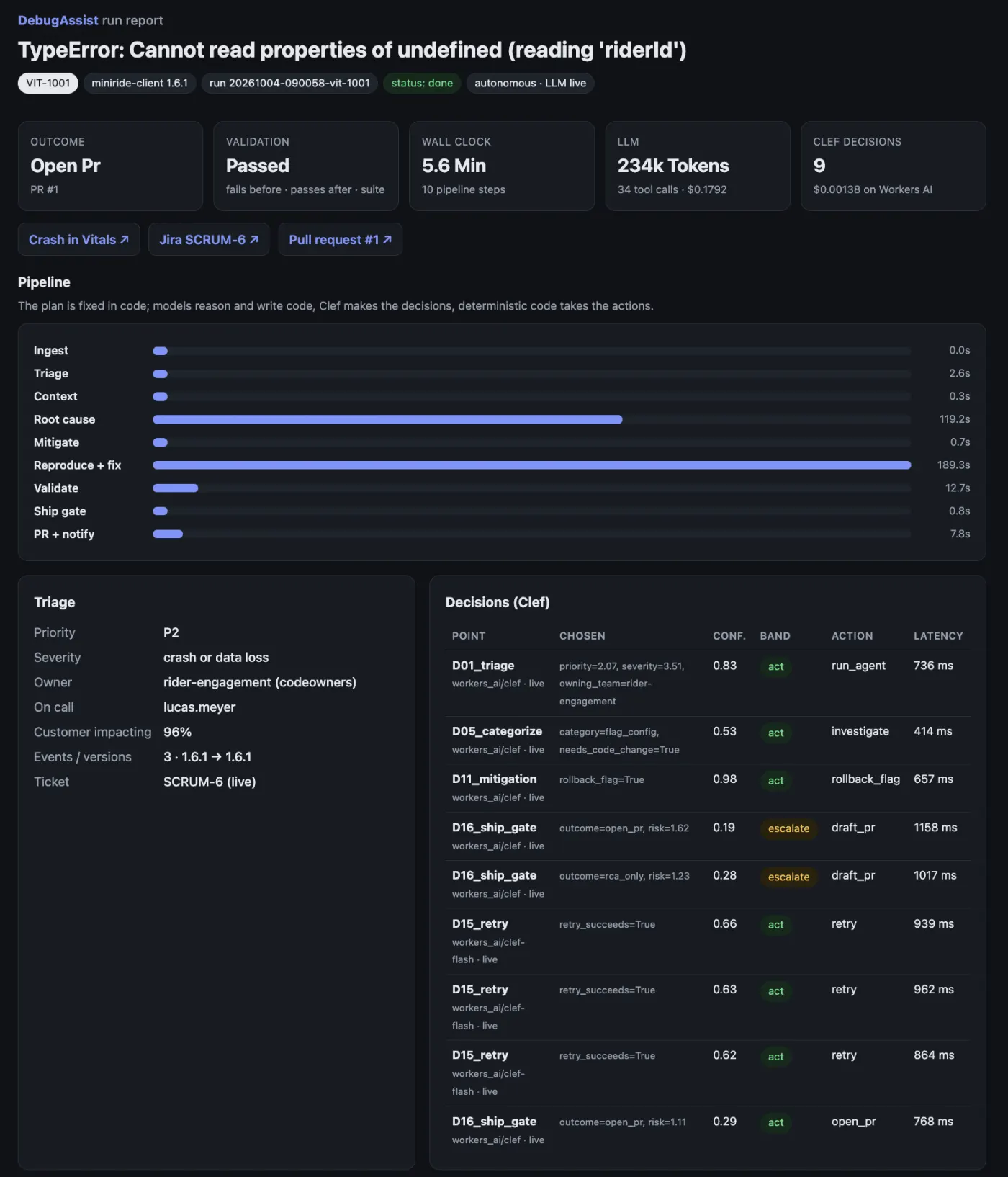 Run report — overview
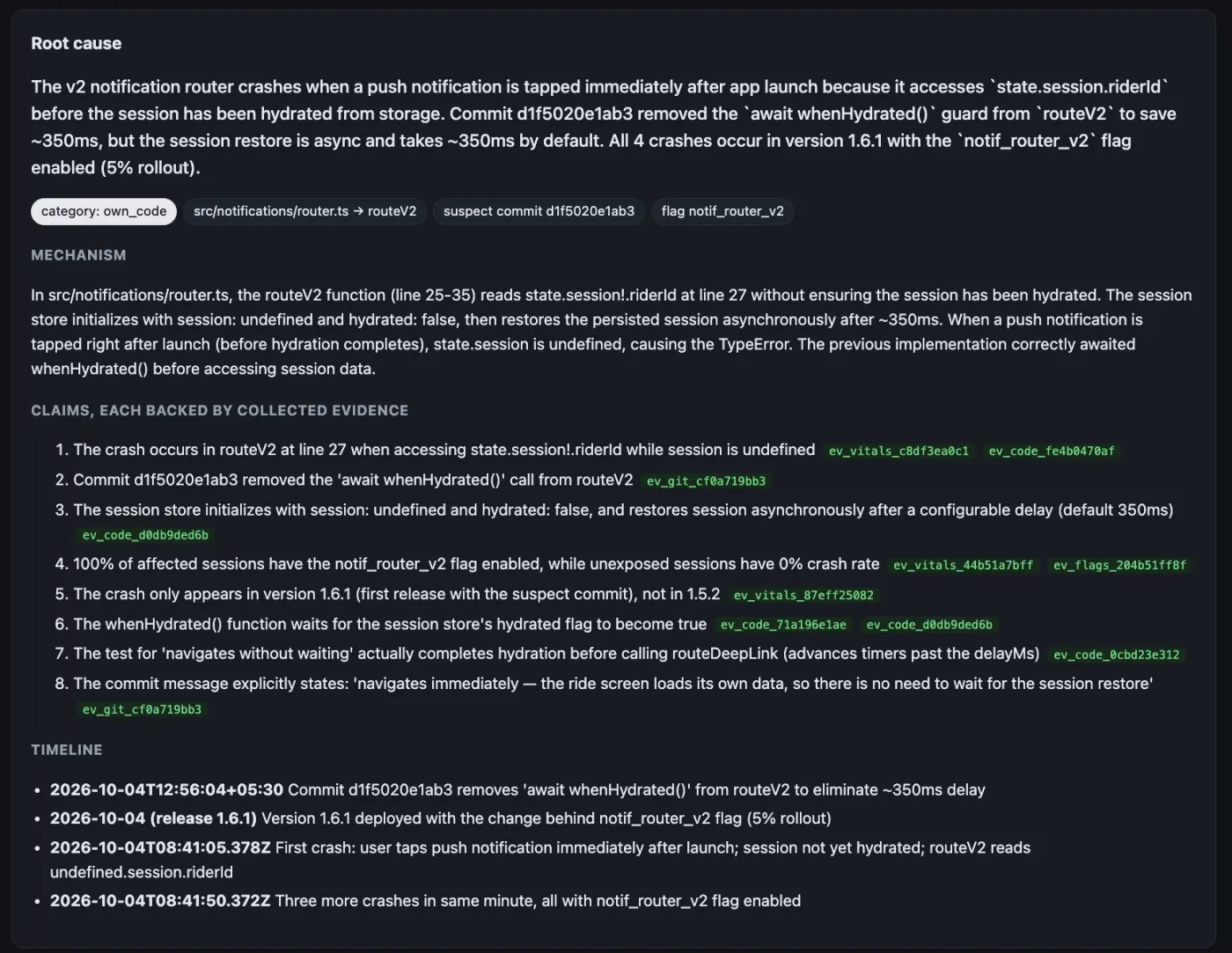 Root cause, with cited evidence
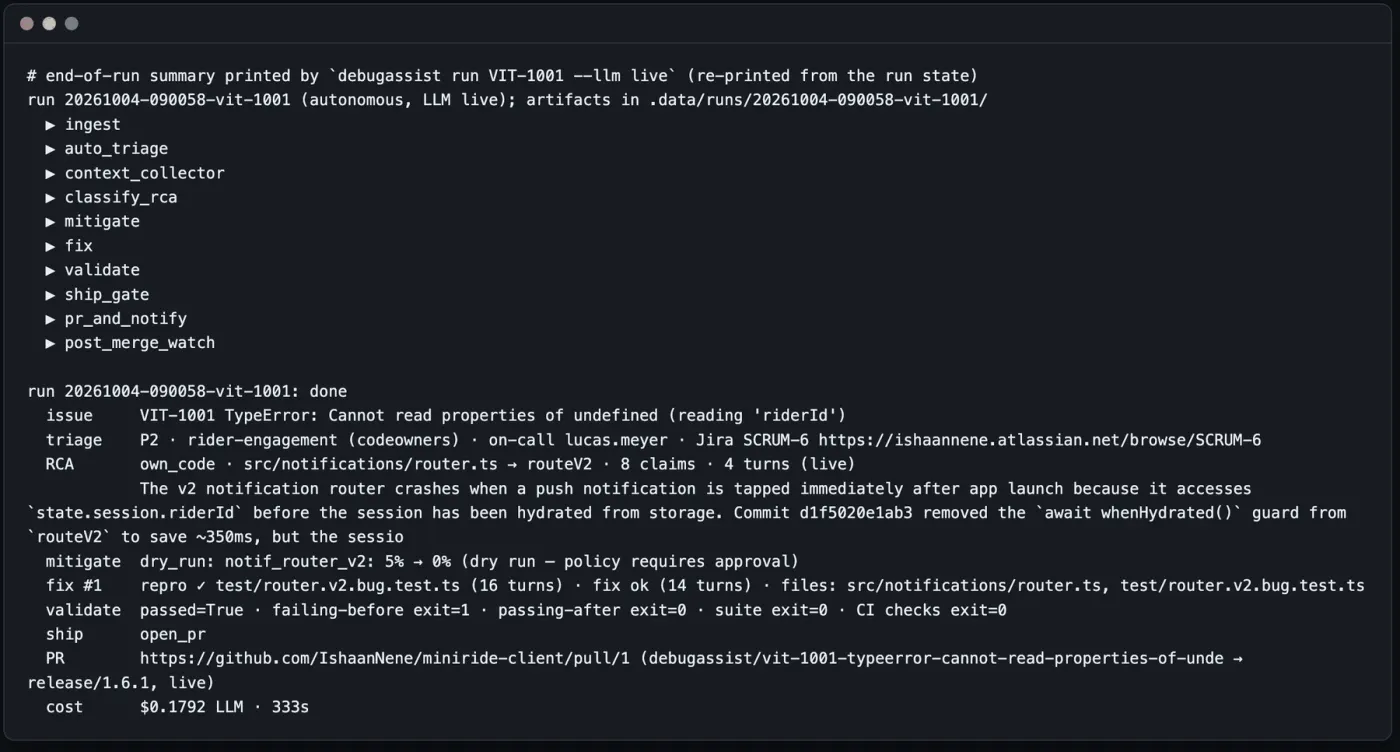 A run from the CLI
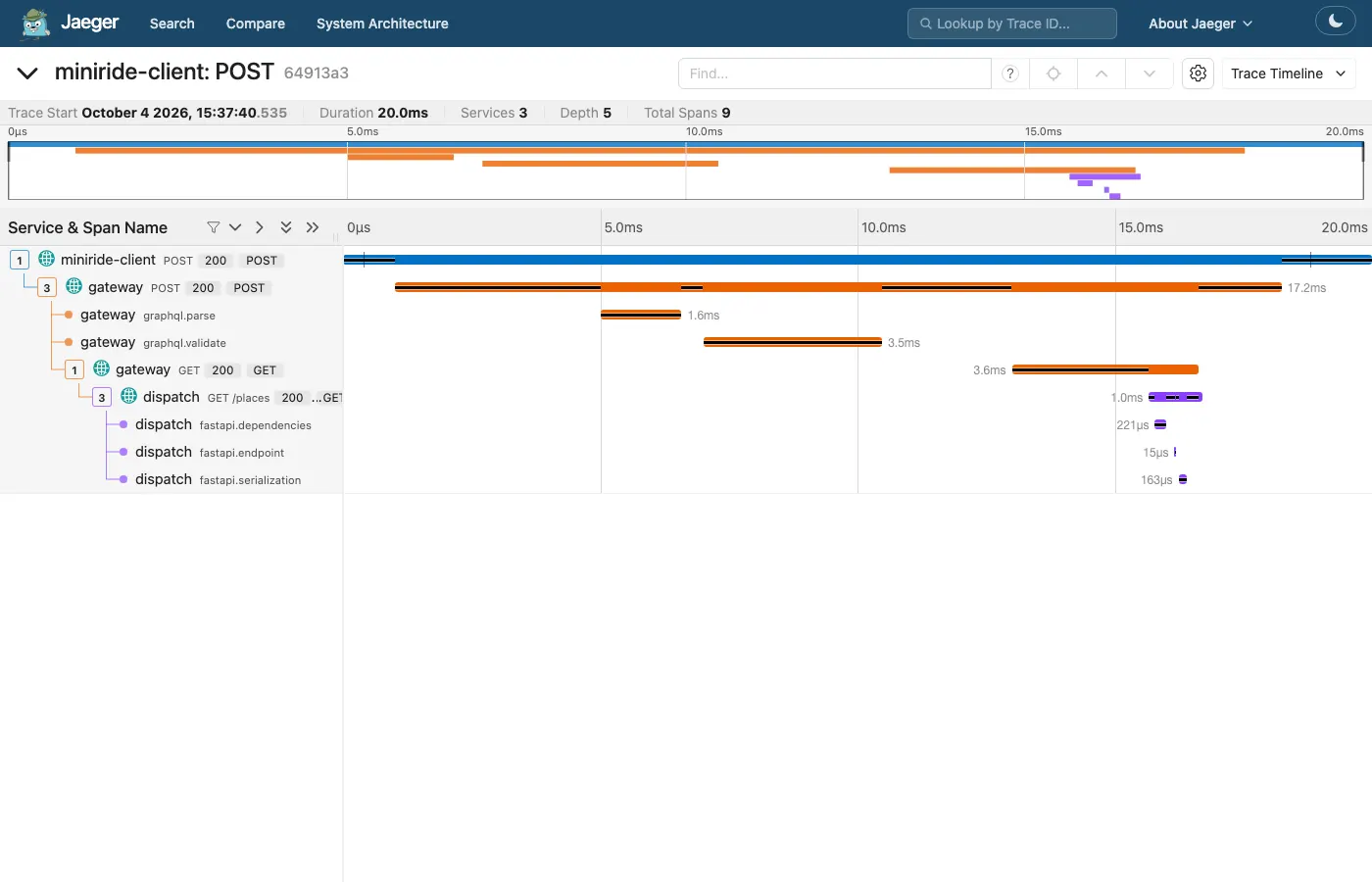 The crash, traced in Jaeger
Key engineering challenges
the bruises- 1
Safe writes
Every PR, ticket or flag rollback passes a policy gate, and the agents work in a sandbox with no network.
- 2
Reproducible evaluation
The evaluation report can be regenerated from committed runs on an anonymous clone.
Results
- ✔ On 25 injected bugs × 3 seeds: root cause right or close in 80% of runs, exact in 65%
- ✔ Hidden tests passed on 80% of fixes, at a median $0.014 a run
- ✔ 32 prompt-injection payloads in the tests; every external write goes through a policy file and an audit log
- ✔ A keyless demo mode with a scripted LLM and mocked integrations
Learnings
- ✎ An agent is only as trustworthy as its evidence: every root-cause claim has to cite something.
- ✎ Write the caveats next to the numbers — synthetic bugs show strengths and gaps, not real-world rates.